
Willow & Teak

both/and.

a blog on the nuances of being human

Welcome friends!

Sharla Cook clinical licensed marriage and family therapist in Connecticut Stamford Darien, New Haven, Greenwich, ketamine assisted psychotherapist

I’m Sharla Cook, MA, LMFTA. I am a clinically licensed Marriage and Family Therapist in Connecticut, Ohio, and soon, New York.

As a licensed psychotherapist, I’ve had the privilege of being invited into the wisdom of beautiful humans from all walks of life. I get to know what they know. I’d love for you to know some of it too. 

Sometimes, after certain sessions, I feel a strong desire to pen what I have learned or observed. The subjects of these blog posts will likely range from PTSD to parenting issues. More often than not, if a post is about parenting a child, the example used is metaphorical, with the message pertaining to any stage of parenting, and even self-parenting. 

Any client details from anecdotes shared here are altered to protect the privacy of the individual. Any similarities observed will be strictly coincidental.


  • The Life-Changing Power of Embracing Nuance, Possibility, and Hope

    Both/And. This idea, simple yet profound, transformed the way I see myself, my relationships, and the world around me. As a human, it allowed me to create space for the gray areas in my black-and-white thinking, enabling me to hold multiple truths at once. As a therapist, it’s become a gift I share with my clients, watching as it sparks profound shifts in their own thinking—and in turn, their lives.

    So, what exactly is Both/And? And how can understanding it impact your life?

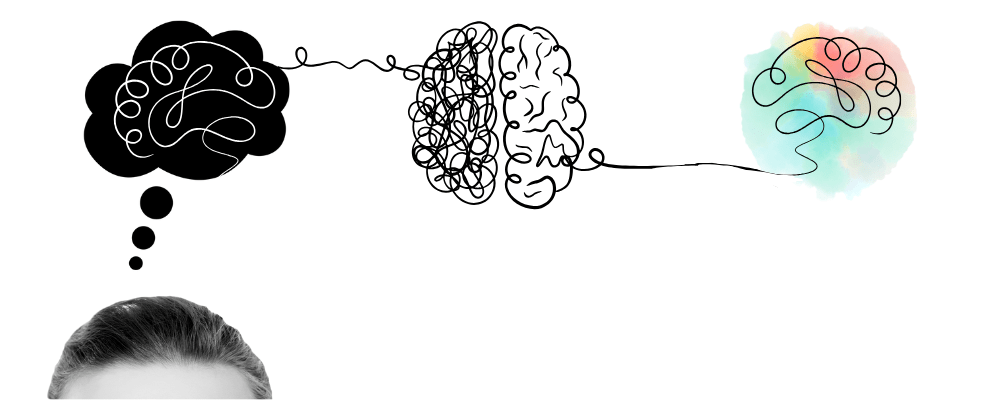
    The Both/And concept is the simultaneous acceptance of two seemingly contradictory or opposing ideas, realities, or perspectives. Instead of clinging to an “either/or” mindset—where we have to choose one thing and reject the other—Both/And allows us to hold both sides as equally valid and true. It acknowledges that life is complex, and that dualities don’t have to be mutually exclusive.

    For example, let’s take a relational scenario. Imagine you’re dealing with a difficult family dynamic, like a relationship with an abusive parent. In the Both/And mindset, you can hold these two truths at once: “My mom loved me,” and “My mom did damage to my life.” Or, “I love my mom,” and “She consistently hurts me, so I need to draw different boundaries.” This allows you to hold space for both the love and the pain without feeling the need to choose one or the other, and without the guilt or confusion that often accompanies such complex emotions. 

    Life—and people—are rarely black and white. The truth is, we are all multifaceted. A person is not simply “good” or “bad”; a relationship is not “all good” or “all bad.” By embracing Both/And, we create room for nuance and grace. It’s a mindset that allows us to move beyond judgment and self-criticism, to sit comfortably in the messiness of life and find peace in the complexity.

    The Power of Nuance and Possibility

    One of the most profound impacts of the Both/And mindset is the possibility it creates. It opens us up to seeing multiple angles of any situation, and in doing so, it increases the room for understanding and growth. This doesn’t just apply to relationships—it extends to every area of life.

    Take expectations, for example. How often do we fall into an If/Then trap? “If I do this, then I will get that.” It’s an easy formula to follow, but life has a funny way of defying such tidy equations. We’ve all experienced that moment when our best-laid plans don’t unfold the way we thought they would. Let’s say you’ve been working hard to reduce calories in the hopes of losing weight, and then, instead of shedding pounds, you gain weight. In an either/or mindset, you might think, “I failed.” You might judge yourself, get frustrated, or feel like the system doesn’t work. But with Both/And, you can hold these truths together: “I worked hard and made changes,” and “The outcome wasn’t what I expected.” This shift removes the harsh judgment, allows for self-compassion, and opens up the possibility to adjust your approach or seek other solutions without feeling like you’ve failed.

    When we live in an If/Then world, we’re constantly chasing a result, and when things don’t go according to plan, we can begin to feel defeated. Both/And teaches us that life doesn’t always work in neat cause-and-effect ways. Sometimes the journey is messy, and that’s okay. It’s about accepting that both the effort and the unexpected outcome are part of your experience. No need to throw out one truth in favor of the other. Both are valid.

    Creating Space for Compassion, Grace, and Growth

    The beauty of Both/And is that it doesn’t just change how we think about the world—it transforms how we treat ourselves and others. It’s a powerful antidote to anger, disappointment, guilt, and shame. When we can hold space for multiple truths, we begin to operate with more grace, empathy, and understanding. We can accept our own imperfections and those of others, which allows self-compassion to flourish.

    This mindset is not a quick fix. It takes practice, and it may feel uncomfortable at first. But as you lean into Both/And, you start to see the world—and yourself—in a new light. You begin to realize that it’s possible to live with complexity, to embrace uncertainty, and to find peace within paradox. 

    The paradox of life is that it’s not either/or. It’s both/and—it’s all the messy, beautiful, contradictory things happening simultaneously.

    Reflecting on Your Own Both/And Moment

    Where in your life are you stuck in black-and-white thinking? What areas of your life are governed by an If/Then mindset? What happens when you can’t choose one thing over the other, and you feel the weight of that decision? Could Both/And offer a new perspective?

    If you can make room for complexity—if you can accept that two seemingly contradictory ideas can exist together in harmony—imagine what that might unlock for you. Your relationships, your goals, your sense of self, and even your well-being could all benefit from the freedom that comes with embracing Both/And.

    We’re all walking through life trying to make sense of its contradictions. But by choosing to see both sides of the coin, we create space for more color, more possibility, and, most importantly, more hope. Both/And is not just a philosophy. It’s a path toward healing, understanding, and peace. Will you walk it?

    —  

    What areas of your life could use a little more nuance and possibility? Share your thoughts in the comments! Let’s talk about how *Both/And* can change the way you see the world.


  • Life is exquisitely hard. It takes energy, motivation, and a healthy mindset that believes a “good” life is even possible in the first place. But the waiting. Ugh. Tolerating the psychic space of possibility is an ever-present shadow, quietly creeping between reality and what we plan for ourselves. Waiting to finish school, waiting to get married, waiting for a promotion, a home, or a pregnancy. Waiting for biopsy results, a check in the mail, or perhaps waiting for something more nebulous, like “growing up.”

    For all intents and purposes, it seems to me that life is lived in the waiting.

    Of course, I’d love to find a way to speed things up to get to my “better life,” but if I’m making myself miserable in the pursuit of that better life, am I actually creating one?

    What if we shifted some of the anxious “waiting” energy we have toward finding enjoyment in it? Many of us have practical strategies for making time pass more quickly when waiting for something measurable, and I wonder if we could apply those to a broader, more macro level.

    For instance, consider how a simple deck of cards not only makes time appear to move more quickly when waiting for a missed bus, but also offers the transformational bonus of being fun and rewarding. What if that could be applied more broadly? If someone was waiting eight months until graduation, what might it look like for them to “play cards” during that time? How could they transform the “waiting” experience so that they were not merely counting down the days, but living a fulfilling life concurrently?

    An unintended result of living this way is the mitigation of disappointment when plans don’t quite work out the way we envisioned. At least we had fun in the meantime!

    Life has to be intentionally sought out and lived, or it will be experienced as a fruitless urgency while we wait for it. On a real human level, I am with you. I want life to speed up so I can get to the “better part”. But today, I’m going to bathe myself in gratitude for all I have, take deep breaths outside, and remain open to seeking side quests, subplots, and self-growth.

    What are some strategies you have for macro-level “time-passing”? I’d love to hear how this resonates with you and what comes up in your body as you consider what this might look in practical terms.

    Leave a comment


  • Beyond Obedience and Perfection


    Many of us hold a narrow view of what “successful” parenting looks like, often shaped by how we were parented ourselves. As a collaborative therapist, I encourage you, my fellow co-collaborators, to approach this topic with gentle curiosity and without judgment or shame. As you reflect on your own parenting journey, consider the following questions:

    • What does successful parenting truly mean?
    • Is “good parenting” simply about raising obedient children?
    • Does it mean having kids with straight A’s and straight teeth?
    • Are the ultimate goals of parenting merely to deliver our children safely into adulthood so they can start their “real lives”?

    Or could successful parenting be about more than just the day-to-day tasks? Could it be about raising children who can navigate imperfection, ambiguity, and heartache? What would it look like if, as parents, we helped our children learn how to fail? How might things have been different for us as children if our parents had acknowledged our struggles and frustrations, offering support rather than pointing out our mistakes or punishing us for falling short?

    Let’s explore this with a simple scenario:


    Rethinking Responses to Failure

    Imagine you repeatedly tell your 6-year-old not to run with their ice cream cone because they might drop it. You warn them multiple times, but they continue to run—until, eventually, the ice cream tips over and spills onto the sidewalk. The child bursts into tears.

    A common response might be a matter-of-fact, “That’s what happens when you run with your ice cream cone.” While this response is natural, it carries an implicit message: “It’s your fault. You made a mistake, and you don’t get to be upset about it.” This feedback is not wrong—children do need to learn about consequences—but the underlying tone can unintentionally reinforce a mindset of self-blame. It’s not hard to see how, as adults, we might internalize this message, focusing only on our failures and creating patterns that withhold grace from ourselves when things go wrong.

    But what if we shifted the conversation? What if we instead acknowledged the child’s feelings and the disappointment of the moment? A compassionate, attuned response might sound something like this:

    “Oh no! You lost your ice cream! That’s so sad. I’m sorry you lost it—I know you were really excited to eat it. I would be sad too if I spilled mine.”


    The Power of Empathy in Parenting

    Offering empathy in moments like this doesn’t mean rescuing the child by simply replacing the ice cream or solving the problem for them. It’s not about coddling or “softening” the lesson. The natural consequence—the spilled ice cream, the missed bus, the forgotten homework, the lost job—has already happened, and it’s a real disappointment. Acknowledging your child’s emotional experience helps them process the moment rather than just learning the rule.

    If the child asks for another ice cream, a gentle boundary might be set with:
    “No, we just get one ice cream as a treat. That’s part of what makes it special. How can I help you hold on to it better next time? Would it be helpful if I remind you not to run, or is there something else we could try?”


    A New Approach: Building Connection and Trust

    This shift in response attunes you to your child’s feelings, creates a dialogue about what went wrong, and opens the door for them to come up with potential solutions. It also fosters an atmosphere of trust, where your child feels comfortable coming to you with mistakes, rather than hiding them in fear of judgment or punishment. It positions you as an ally, someone they can rely on for guidance and understanding—rather than someone from whom they must hide their missteps.

    When we approach parenting with empathy, compassion, and curiosity—rather than simply aiming for compliance or perfection—we allow our children the space to grow, fail, and learn with confidence.